

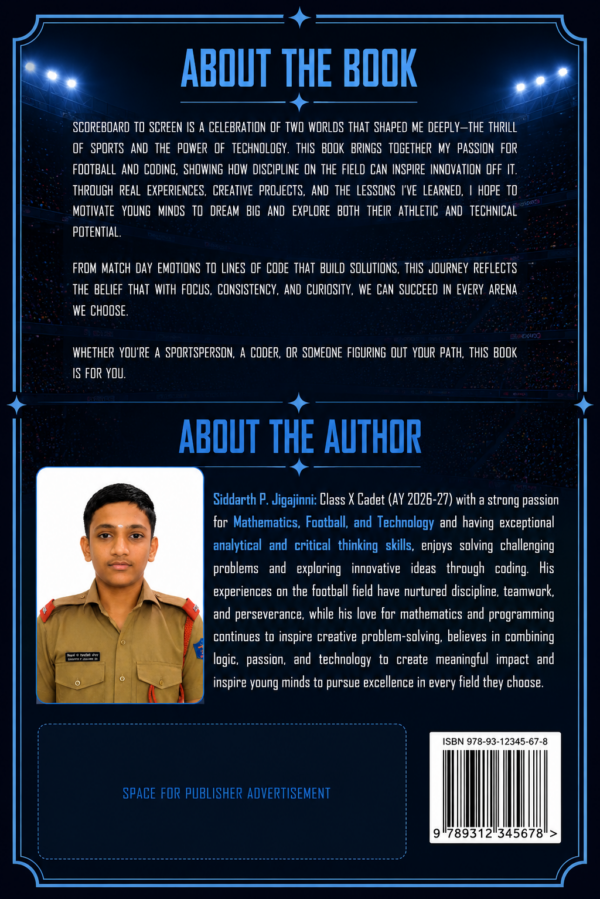










The Webwright’s Guild
Your Tactical Field Guide to Front-End Mastery
Written by: CDT. Siddarth P Jigajinni
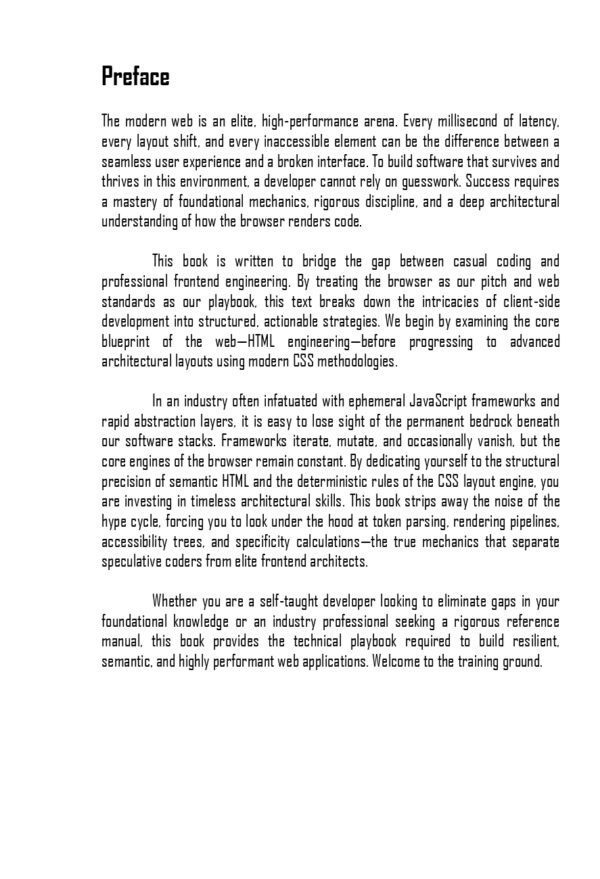
The Webwright’s Guild is a practical, structured guide to front-end web development, designed to help learners understand how modern websites are planned, structured, styled and made interactive. With a distinctive football-inspired approach, the book turns essential web development concepts into a tactical journey—from understanding the fundamentals to building well-organized and responsive web interfaces.
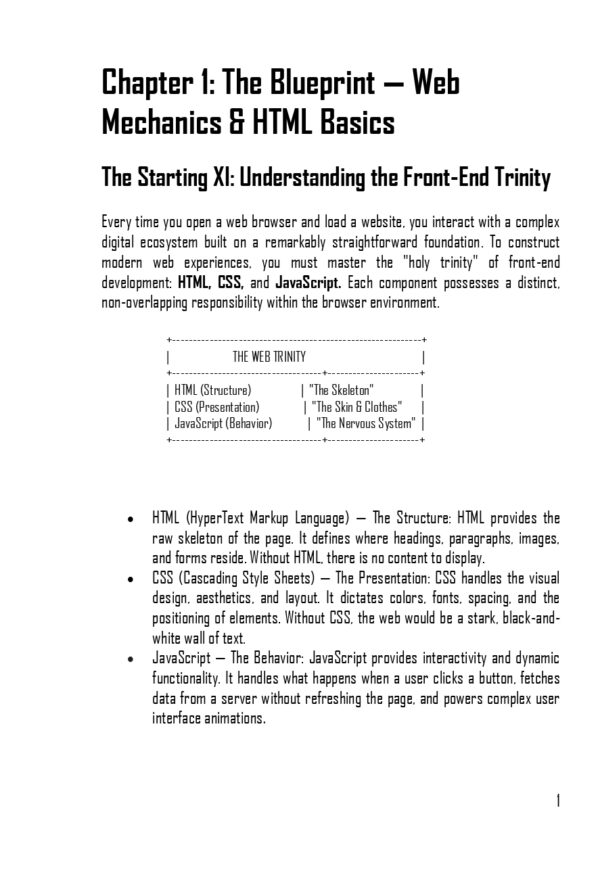
The book introduces the core front-end development technologies—HTML, CSS and JavaScript—and explains how they work together to create functional and user-friendly websites. Instead of treating web development as a collection of disconnected syntax and commands, it presents the subject as a coordinated system in which structure, presentation and behaviour work together.
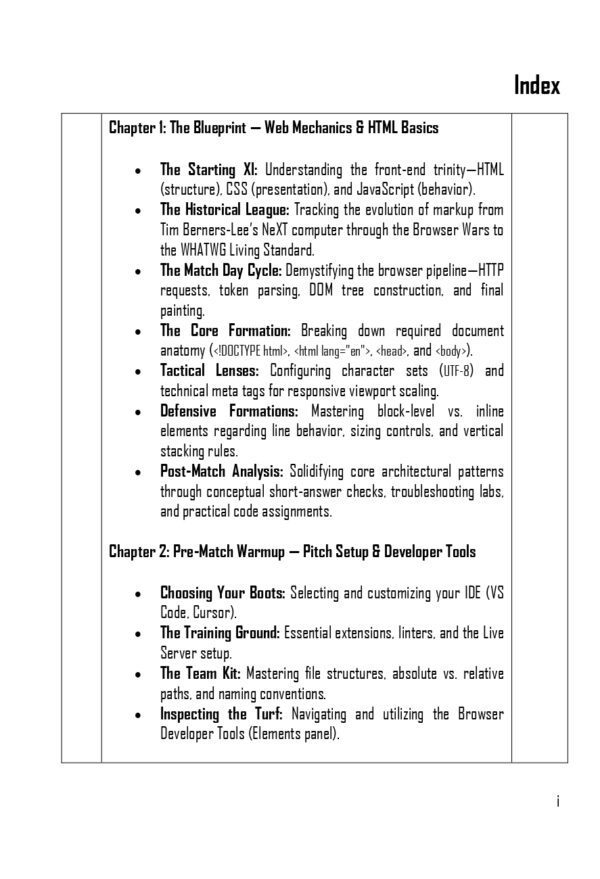
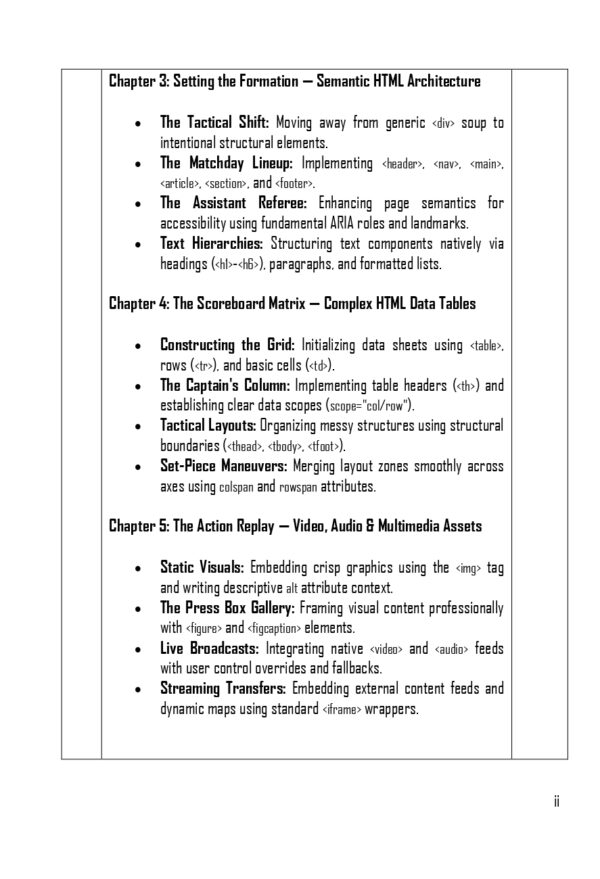
Beginning with HTML fundamentals and web mechanics, readers explore document structure, the browser pipeline, the DOM, character encoding, responsive viewport settings, and the distinction between block-level and inline elements. The book then progresses into semantic HTML, covering structural elements such as headers, navigation, main content, sections, articles and footers, along with foundational accessibility concepts.
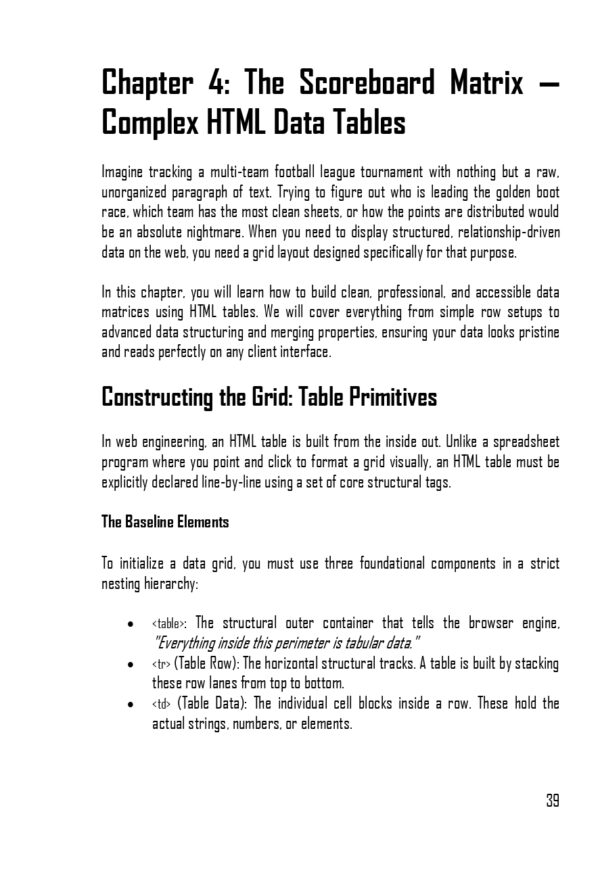
A dedicated section explores HTML tables and data organization, including table headers, data scopes, structural table sections, colspan and rowspan. Readers also learn how to incorporate images, audio, video and embedded content into web pages using appropriate HTML elements.
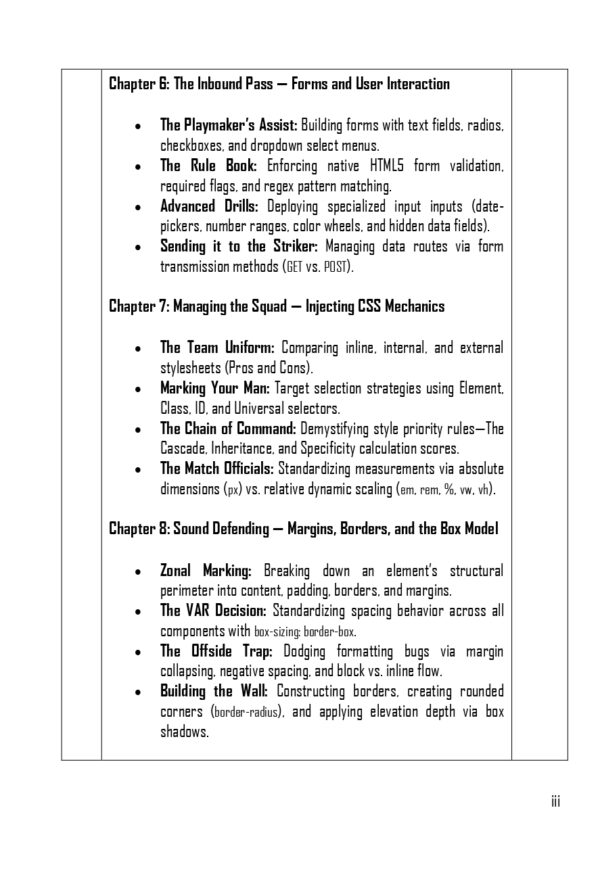
The book provides practical coverage of HTML forms and user interaction, including text fields, radio buttons, checkboxes, dropdowns, specialized inputs, validation, required fields, pattern matching, and GET and POST form submission methods.
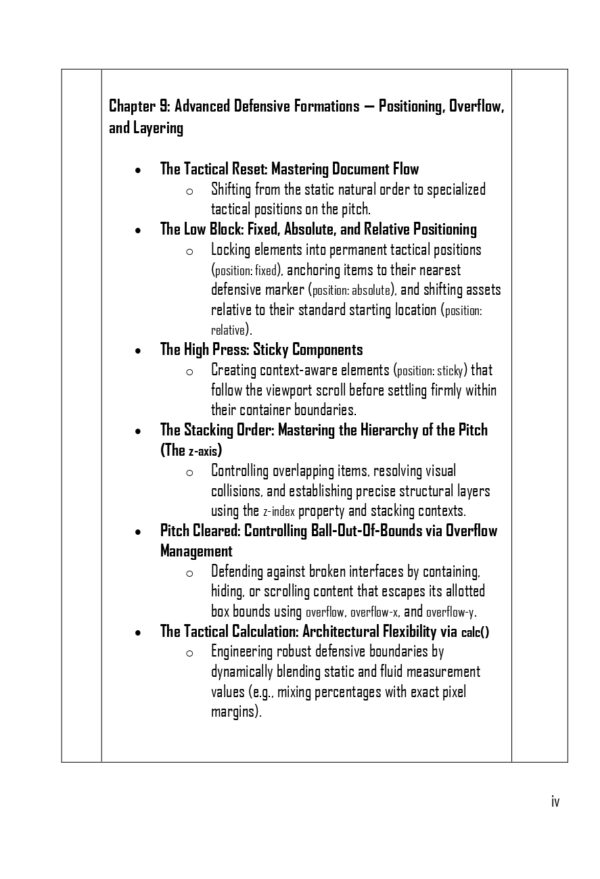
The CSS portion moves from basic stylesheet integration and selectors to more important layout and design concepts. Readers learn about the CSS cascade, inheritance, specificity, units, the box model, margins, padding, borders, border radius and box shadows. The book also explores advanced positioning concepts such as static, relative, absolute, fixed and sticky positioning, together with stacking contexts, z-index, overflow management and the calc() function.
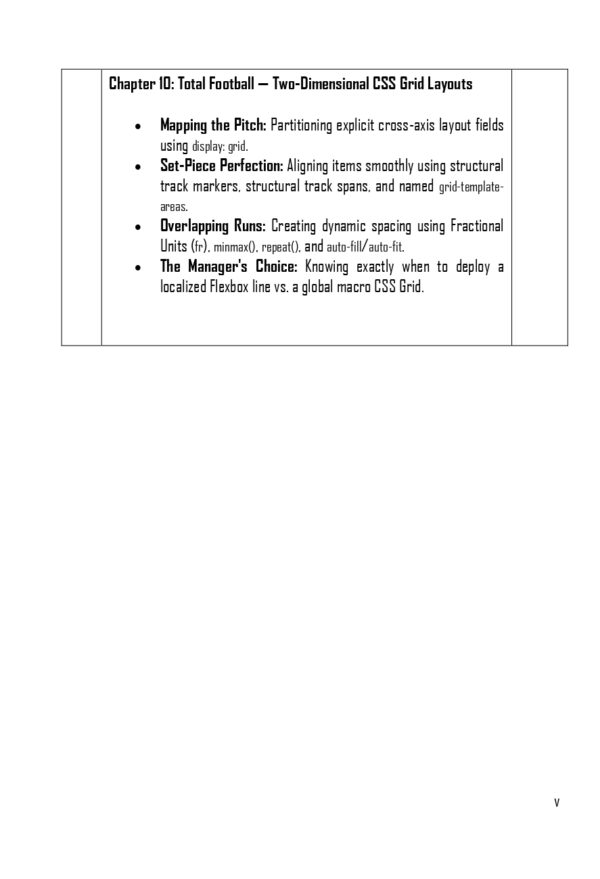
For modern layout development, the book introduces CSS Grid, including grid tracks, spans, named grid areas, fractional units, minmax(), repeat(), and responsive sizing concepts. It also helps readers understand when a localized Flexbox layout is appropriate and when a larger CSS Grid structure is more suitable.
Practical development workflow is also addressed through topics such as code editors, VS Code, Cursor, extensions, linters, Live Server and Browser Developer Tools. These tools help learners move beyond writing code and develop the habit of inspecting, testing and troubleshooting web pages systematically.
With its “train to elite” and football-tactical theme, The Webwright’s Guild offers an engaging way to approach front-end development while retaining focus on practical technical skills. It is suitable for students, beginners in web development, aspiring front-end developers, computer science learners, web design enthusiasts and anyone looking to strengthen their HTML and CSS foundations.
Whether you are taking your first steps into web development or looking to organize your existing knowledge, The Webwright’s Guild provides a structured field guide to building cleaner, more semantic, responsive and maintainable web interfaces.